

































































Hong Kong Exchange to Delist China Evergrande EV Unit Over Missing Earnings
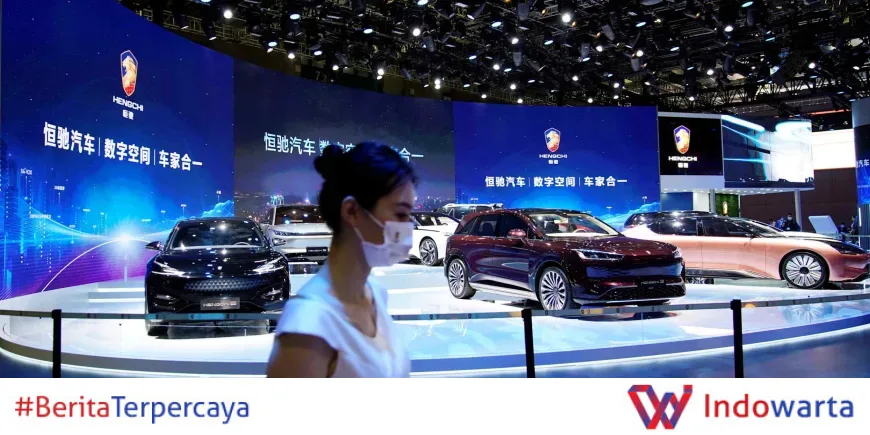
Hong Kong Exchanges and Clearing (HKEX) has decided to delist China Evergrande New Energy Vehicle Group, the electric vehicle unit of bankrupt property developer China Evergrande Group, after the subsidiary failed to disclose its financial results. The listing will be canceled on December 14 unless the carmaker requests a review, according to Nikkei Asia.
HKEX Moves to Delist Evergrande EV Unit
The Hong Kong stock exchange operator announced the decision after China Evergrande New Energy Vehicle Group failed to publish its financial results. The delisting is part of HKEX's enforcement of listing rules that require companies to disclose periodic financial reports. Without those reports, investors lack basic information about the company's financial health, and the exchange deems the stock unsuitable for continued trading.
Baca juga: Ekspor Mobil China Diproyeksi Naik 50% pada 2026, BYD dan Xpeng Gencar Ekspansi Eropa
The EV unit, which was once seen as a potential growth engine for the embattled Evergrande empire, has been struggling amid the broader debt crisis that has engulfed its parent company. China Evergrande Group, a major property developer, was declared bankrupt, and its financial troubles have cascaded to its subsidiaries. The EV unit's failure to file results is a direct consequence of the parent's collapse and the ensuing chaos in its operations.
HKEX's decision to delist the unit underscores the exchange's commitment to maintaining market integrity. Companies that do not meet disclosure obligations face delisting, a process that can be lengthy but ultimately removes non-compliant firms from the exchange. The move is a significant blow to Evergrande's EV ambitions and to shareholders who have already seen the value of their investments plummet.
Timeline and Conditions for Delisting
The delisting will take effect on December 14, 2026, unless the carmaker requests a review of the decision. The review process would allow the company to present its case to the exchange's listing committee, potentially delaying or overturning the delisting. However, given the unit's financial state and the parent's bankruptcy, a successful appeal appears unlikely. The company has not yet indicated whether it will seek a review.
The missing earnings report is not the first sign of trouble for the EV unit. The unit had been under pressure to show progress in its vehicle production and sales, but the parent's financial woes have hampered its ability to raise capital and continue operations. The delisting is the latest chapter in the unraveling of Evergrande's business empire, which once spanned property, electric vehicles, and other ventures.
Baca juga: Pemasok Suku Cadang Jepang Tergeser, China Kuasai Transisi EV
Under HKEX rules, a company that fails to publish financial results within the required timeframe may have its listing suspended and eventually canceled. The exchange typically gives the company a deadline to comply, and if it fails, the delisting process begins. In this case, the EV unit did not meet the deadline, leading to the current decision.
Evergrande's Debt Crisis and the EV Unit's Struggles
China Evergrande Group's debt crisis has been unfolding for years, with the developer defaulting on billions of dollars in offshore bonds and facing numerous lawsuits from creditors. The bankruptcy of the parent has left its subsidiaries in limbo, unable to rely on the parent for financial support. The EV unit, which was launched with grand ambitions to compete in China's booming electric vehicle market, has been particularly vulnerable.
The unit had promised to produce millions of vehicles and had secured some funding, but production delays and the parent's financial troubles derailed those plans. The EV market in China is highly competitive, with established players like BYD and Tesla dominating, and newer entrants struggling to gain traction. Evergrande's EV unit never achieved significant market share, and its financial losses mounted.
The delisting will further isolate the unit from public capital markets, making it even harder to raise funds. Shareholders who invested in the unit's stock will see their shares delisted, meaning they will no longer be able to trade them on the exchange. The delisting does not necessarily mean the company will cease operations, but it severely limits its options.
Impact on Shareholders and the Market
The delisting is a blow to shareholders who have already suffered significant losses. The unit's stock has likely been suspended for some time, and the delisting formalizes the loss of liquidity. Retail investors who bought into the EV unit's promise may find their investments virtually worthless. Institutional investors who held the stock will also be affected.
For the broader market, the delisting serves as a reminder of the risks associated with companies connected to troubled conglomerates. It also highlights the importance of timely financial disclosures. HKEX's action reinforces the exchange's regulatory role and may serve as a deterrent to other companies considering skipping reporting deadlines.
The delisting of Evergrande's EV unit is part of a larger trend of Chinese companies facing delisting or regulatory action due to financial irregularities or debt issues. The Chinese government has been cracking down on corporate governance failures, and the Evergrande case is one of the most prominent examples.
Next Steps for Evergrande EV and HKEX
Evergrande New Energy Vehicle Group has until December 14 to request a review. If it does, the delisting will be put on hold while the review is conducted. The review process could take several weeks, and the outcome is uncertain. If the company does not request a review, the delisting will proceed as scheduled.
Even if the company requests a review, it would need to demonstrate that it can comply with listing rules, including publishing its financial results. Given the parent's bankruptcy and the unit's financial difficulties, that may be a tall order. The company might instead focus on restructuring or selling assets outside the public market.
For HKEX, the delisting is a routine enforcement action, but it also sends a signal that the exchange will not tolerate non-compliance. The exchange has delisted several companies in recent years for similar reasons, and it continues to uphold its listing standards. The Evergrande EV case is likely to be cited as an example of the exchange's diligence.
Analisis Redaksi: Delisting Evergrande EV dan Pelajaran Tata Kelola
Keputusan HKEX untuk menghapus pencatatan China Evergrande New Energy Vehicle Group bukan sekadar urusan administratif bursa. Ini adalah cermin dari runtuhnya tata kelola perusahaan yang ambisius namun rapuh. Evergrande pernah menjadi simbol ekspansi besar-besaran konglomerat properti China, tetapi ketika utang menumpuk dan arus kas mengering, unit-unit usaha ikut terseret. Delisting ini menegaskan bahwa pasar modal tidak memberi ruang bagi perusahaan yang gagal transparan, terutama dalam hal laporan keuangan.
Bagi investor, kasus ini adalah pengingat pahit bahwa janji pertumbuhan tanpa fundamental yang kuat adalah jebakan. Saham Evergrande EV pernah diperdagangkan dengan optimisme tinggi, tetapi kini nasibnya berakhir di papan delisting. Regulator Hong Kong menunjukkan konsistensi: tidak ada kompromi bagi emiten yang lalai menyampaikan kinerja keuangan. Langkah ini patut diapresiasi karena melindungi integritas pasar, meski harus diakui terlambat bagi mereka yang telah kehilangan uang.
Ke depan, fokus beralih ke nasib karyawan, pemasok, dan sisa aset Evergrande EV. Apakah perusahaan akan mencari perlindungan di luar bursa, atau justru menjadi bangkai kapal yang ditinggalkan? Tanpa akses ke pasar modal, opsi untuk bangkit sangat tipis. Kisah ini adalah peringatan bagi konglomerat lain di China dan Asia: utang bukan sekadar angka di neraca, tetapi juga pertaruhan reputasi dan kelangsungan usaha.
Sumber: hkex.com.hk
What's Your Reaction?
 Like
0
 Dislike
0
 Love
0
 Funny
0
 Angry
0
 Sad
0
 Wow
0